Thursday, December 30, 2021

Two Kinds of Evangelical


Two Kinds of Evangelical


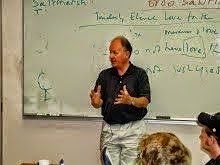
Melvin Tinker,1955 - 2021

 The sudden death of Melvin Tinker, who was  born in 1955, and who has just died, is very sad. But what by God’s grace he achieved, prompts and enables  us to see clearly two versions  of evangelicalism and the Church of England at present. There is an unconditional evangelical in the Church of England who I shall refer as stickers,  and those whose adherence to the ministry in the Church of England is conditional, to  be called followers.


Stickers

1. There are congregations that hold to and are fed by serious and able evangelical ministers who bear ‘Happy Clappy Religion’ which is what evangelicals are said to be by commentators who don’t bother to take it seriously, So All Souls in London (for example) is a serious evangelical ministry,  till associated with the outlook and ministry of John Stott. His the centenary of his birth is being celebrated by reissuing some of his sermons on the Incarnation, as we write. All Souls (and those like it) makes it clear that their congregation is in the Church of England, though the directions of the episcopacy of the Church of England are by and large ignored.  It seems in All Souls that the doctrinal features in the Church that it disapproved of are simply ignored. The bulk of evangelical Anglican congregations are stickers. At the rate that the bishops of the church speak at all, it is likely that stickers will find it more and more difficult to be silenced - in issues like the meaning of the Cross, women in ministry, including its bishops, and other issues of gender. Heretic bishops could once be counted on the fingers of a hand, but now they are the rule. Where is there an evangelical  bishop to make that fact clear?  There are none, it seems.. The vicar of a sticking ministry does not educate his officers as to how woeful the national leadership is. As a consequence there is more than a touch of Quietism in the average evangelical congregation in the Church of England


Followers to the Church of England was provided by J.I.Packer, for example, whom adherence to the Church  of England was not negotiable, and departure from the C of E was come what may. He started well, writing of a current radical bishop, J.A.T.Robinson, the author of Honest of God. In a critical pamphlet on Anglican radicalism, Keep Yourselves from Idols, published in the 1963, Packer said


 It is, therefore, a grave matter when a  bishop appears to be driving a coach and four through the plain and acknowledged sense of Scripture, the teaching of the Thirty-nine Articles, and the beliefs of the mass of English churchmen’.(page 1)


 By the 1970’s, Packer must have become aware that radicalism was embedded in the elite  of the Church of England. He was humiliated by the so-called radicals as he sat with the members of  theologians of Anglicanism in the church’s Doctrinal Commission. He found himself in a clear minority by the currents of radical theology,  with sitting with the men such as its chairman  Maurice Wiles, Dennis Nineham, and Geoffrey Lampe.  But this experience seemed to strengthen Packer’s resolve to continue in the Church of England. And he made an alliance and friendship with  Anglo-Catholics such as  E. L. Mascall became a friend, because they each regarded the gospel as supernatural. Both groups were against union of English Methodism with the Church of England, an alliance  which proved successful. This friendship led Packer to say:


.’…whatever reservations I may have about the ecclesiology, Mariology, and Eucharistic teaching of such a man as my learned man Dr. Eric Mascall, I am profoundly grateful to him for books like Up and Down in Adria, The Secularization of Christianity and Theology and the Gospel of Christ, and I hope you are too. Should the future see a catholic renewal in the Church of England, having the same non-triumphalist, non-partisan character as has marked the evangelical renewal of the past generation, I am bold to predict that both that the church will benefit and  evangelical-catholic solidarity against views which erode the supernatural in the realm of redemption will become yet stronger. Such co-belligerence  will not compromise either side , and will be tactically appropriate for furthering faith in in those fundamentals concerning our incarnate Lord on which we are truly agreed.


Does it not seem that Packer testified his loyalty to evangelicalism in the Church of England by experience of the opposite views, theological radicalism and conservative high church, perhaps to test himself, but his behaviour, was often perplexing to his evangelical friends. 

 After his move to Canada in 1979 he was expelled from the liberal-led Anglicanism in British Columbia when it advocated same-sex marriages.  Packer renewed his Anglican priesthood through GAVCOM. As an evangelical,  he was a sticker.

Followers 

Melvin Tinker was a follower  of the traditional theology and practice of the Church of England that Packer represented, though in a different way. Melvin was the product of a family whose lives were dominated by the coal mine. He read his first book when he was thirteen years old. Following his conversion to Christ, he studied at the University of Hull, and his theology was learned at the Anglican college of Wyciffe Hall, Oxford, and he was ordained into the Anglican ministry. He became a chaplain at Keele University, then held to various posts, one as a curate to an evangelical church  and then to  a large church in Hull, a rather neglected city. `Over 25 years,  the congregation, St John Newland, grew up to 500 souls. So here is a successful evangelical Anglican vicar. But during this period Melvin got more and more uneasy by the stance of the Church of England. He came to believe that the leaders of the  Church of England had come to promote views that were  secular rather than that of the New Testament, and viewed Christianity as a world religion along with Islam, Hinduism and so on, therefore lacked a prophetic voice, following that culture. When Mervin took his congregation out of the Church of England shortly before his death.  it became three distinct congregations.


Melvin was outspoken when it was called for. For example, .when the people in charge of York Minster welcomed the LGBT , cultural Marxists, , including same-sex marriage, which is not the official position of  the Church of England. He went on TV news to publicise this. As a consequence his plans to hold a conference in Derby Cathedral were disallowed because of what he would say from the pulpit.


Around this time, October 2020,  he wrote in the periodical Anglican Midstream on his outlook, of which this is an extract.


There was the accelerating downgrading of the Church of England as a Biblical denomination. The July 2017 General Synod was a watershed with open disdain being shown towards orthodox beliefs and believers. This didn’t mark any crossing of any ‘line in the sand’, but an unmasking of what has been there for some time with those pursuing a progressive agenda having become emboldened to be more openly aggressive. The trajectory was clear and it seemed to us that it was simply a matter of time (sooner rather than later) when a form of words would be found to enable those holding non-biblical views on gender and sexuality to be formally affirmed as part of the ‘mutual flourishing’ favoured by the Archbishop of Canterbury.


Melvin made it clear to his flock that this state of affairs was intolerable. At his retirement the one congregation he was minister of had become several congregations in Hull. Alas, his further plans were cut short by cancer discovered in October 2021.  By now he had severed the connections of these congregations had to the Church of England of the day. And all too shortly he was called to his Lord. What made him a follower was that his Anglican congregation complied with the Articles of the Church of England. Melvin was not the only minister to break from contemporary Anglican. Happily there are others, which follow in his example. For Melvin and these others, unlike Jim Packer and John Stott and many other solid evangelicals the state of the current mind of the bishops  of the Church of England had reached its limits. That situation is intolerable for them. These are followers.


Monday, November 29, 2021

Gribben 3.The Future of the Church


The locations of the Seven Churches
 

Gribben 3.The Future of the Church

After this interesting and entertaining tour of the changes of one congregation of Christ in its search for a Christian culture, it may be wise to steady ourselves with a general view of  the church . So, this last time, we examine  ‘ the church and its Re-construction,  The Future of the Church’

In reading Gribben’s book, we have seen congregations of the Reformed sort, advocating different contexts of culture as they look into the future. This is how Gribben puts it in the  closing pages of his book, when he ruminates on the prospects of Christian Reconstructionism. He notes the remnants of this, now in the prospect of a general eschewing of physical violence in their politics. Rushdoony, who died in 2001, rejected violence, and Wilson has continued to grow his church in Moscow, Idaho, and to stimulate various kinds of publications, but with no sign of rejecting the elections and political policies of Washington, even when they at far as can be in the boundaries of the USA.   What were taken to be signs of the Second Coming have largely disappeared. There are no doctrines of new–minted ideologies expounded from the pulpit as there is (one hopes) exposition of the central doctrines of the Westminster Confession, and those who expound its sister Confessions.


Christ the Foundation

According the NT, the future of the church is set out in the gospel  of Matthew in ch.16 15-20. In Mark’s gospel there are three similar occasions, in 8.27, 9.30, and 10.22. in 8.27 Christ asked his disciples, Who do people say that I am’. Some thought he was John the Baptist, and others Elijah, and one of the prophets When he asked, But who do you sat that you I., Peter answered  ‘You are the Christ’, and he strictly charged them to tell no one about him’ On the second occasion, 9.30,  takes up his concern to keep this secret to the disciples, because he was teaching his disciples privately, ‘The Son of Man is going to be delivered into the hands of men. And when he is killed, after three days he will rise’. And the text adds ‘But they did not understand  the saying and were afraid to ask him’.  The third occasion was recorded in 10.32. ‘And they were amazed , and those who followed him were afraid. And taking the twelve  again, he began to tell them , saying, ‘See, we are going up to Jerusalem, and the Son will be delivered over to the chief priests and the scribes, and they will condemn him to death and deliver him over to the Gentiles. And they will mock him, and flog him and kill him. And after three days he will rise.’(10.34) The three were more detailed than the earlier. Not silence as at first, but privacy, his arrest and killed and his rising again, and finally in his destiny the Gentiles were involved, being handed over to them, to Pilate, followed by a resurrection after ‘three days’.

 In Matthew there are also of three occasions, when Jesus told of his crucifixion, Matt 16.13, 17.2, and  20.17. Of these the first is the most detailed. Again it is Peter who confesses Christ, the Son of the living God. ‘And Jesus answered him, Blessed are you, Simon Bar-Jonah! For flesh and blood has not  revealed this to you. And I tell you, you are Peter and on this rock I will build my church, and the gates of Hell shall not prevail against it, and the gates of hell  shall not prevail against it. I will give you the keys of the kingdom of heaven, and whatever  you bind on earth shall be bound in heaven, and whatever you loose on earth shall be loosed in heaven. Then he strictly  charged the disciples to tell no one that he was the Christ. (17-20).

There are those in the Christian church that identify Peter with the Papal authority, thus undermining Protestantism.  But surprisingly, Calvin says on the phrase ‘And on this rock’ (11.18), ‘whence it is evident how the name Peter comes to be applied  both to Simon individually, and to other believers. It is because  they are founded on the faith of Christ, and joined together, by a holy consent, into a spiritual building, that God may dwell  in the midst of the people of Israel for ever. (Ezek, 43.7). So Peter designates any believer, and especially the apostles, building ‘a new church, which would prove victorious against all the machinations of hell’. (Harmony of Matthew, Mark, Luke, volume I, 291, part of Calvin’s treatment to p.307). Not Peter an individual but a representative of all those who were enlightened, as a fruit of the Holy Spirit’s work  released through Christ’s’ crucifixion and resurrection. The focus is on the person of Christ and the faith in him.

This is focused narrowly, but expansively, on the Saviour and his early church. Of this Paul refers to the  ‘household of the  apostles and prophets, Christ Jesus himself being the cornerstone, in whom the whole structure, being joined together grows unto a holy temple in the Lord’. (Eph. 2.20-2)

Culture in the Church

This brief survey has been necessary in order to see that there is little if any importance given to the ‘culture’ of the church’ setting, or the ‘context’ in which the church  exists. The churches can err, becoming tarnished by its context.

 We see this this through the verdicts the Apostle John passes on the seven churches of Asia, all located closely together in what is today Turkey. This is set out in ch.1 of John’s Revelation, and then to the seven churches of Asia, and the comments of each in italics.

1. Ephesus, abandoned your first love,

 2. Smyrna, rich, slanders,

3. Pergamum, where Satan dwells, the teaching of the Nicolaitans

4. Thyatira,  tolerate  Jezebel. Practicing sexual immorality, eating, to eat food sacrificed to idols

5. Sardis, reputedly dead, asleep, weak

6. Philadelphia, lacking in power

and

7. Laodicea, tepid, confidence in being rich, prosperous, self-sufficient, but pitiable, poor, blind and naked.

These judgments, if that is the correct word to use, insofar as they are exact, have to do with faithlessness or its opposite, but there is no reference to the political or social cultures through which the church was travelling , or how besides the Reformed churches, and of their relations to, say, the countless numbers of Christian Pentecostalists, fare in cultural matters. And by what political manoeuvres that ‘the kingdom of the world has become the kingdom of our Lord and of his Christ, and he shall reign for ever and ever’. (Rev. 11.15) This seems to announce the end of politics.

Every one who has post-millenial opinions has a view of the years of Gospel plenty to come and  the culmination in the visible coming again of Jesus. This description has a number of variants, as to speed and timing, and place and of the nature of Christ’s personal presence, giving plenty of scope for discussion and the presence of a good deal of uncertainty.

The End.

Gribben’s interesting book ends by certain congregations of Reformed churches waiting patiently for more favourable cultural conditions coming to pass in the United States for the project of Christian reconstruction to be visited again, as it was in its early days. For example, Crawford Gribben says that of Moscow Idaho, ‘The  Moscow community has survived, and has successfully resisted American and it greatest success may be found in its members creative work.'(143) Authoring books is certainly a cultural endeavour, but though necessary is it sufficient for Christian Reconstruction? Gribben’s comment is ‘But, as the New Saint Andrew’s students know only too well, a plot can only be identified as comedy when it provides a happy ending. Will there be a happy ending ? Will the ‘wildly postmillennial’ expectations of the New Saint Andrews students be realized? And would that be a happy ending for anybody else?’ (143).


Monday, November 01, 2021

A Second Look at Crawford's Book


In the latest Helm’s Deep, which received a healthy interest, I suggested that in Crawford’s book there is a treatment  of chapters of some of the forces that worked to bring about the culture of Christian Reconstruction in Moscow, Idaho in the last generation, in separate chapters. The first was entitled ‘Migration’, the second  ‘Eschatology’

Eschatology is the study of the last things. There are various schools of eschatology, and it means that the thinking of reconstruction takes place  in the jostling between postmillenarianism  and premillennialism, which requires that those who think and lead about Reconstruction have an view, and I suppose gives a  movement its Christian character for they are views  of the coming in glory Lord Jesus Christ, and the point of the two views that each have different views of human cultural and political conditions between a period of evident progress in which the church works towards a climax when the coming of Jesus will be visible for a long period of time, and the premillennial view which holds that the coming of Jesus will be sudden.  Gribben gives interesting vignettes of the varied positions held by individuals in his period 1970-2020.

 The interest in the imminence of the second coming is one thing that separates American evangelicalism from their British evangelicals. If evangelicals in the United Kingdom are agreed in one thing that the Second Coming is not coming soon, might be their position. ‘Where is the promise of his coming? For ever since the fathers went asleep, all things are continuing as  they    as they from the beginning as they were from the beginning of creation (2 Peter 3. 4) ‘.....But by the same word the heaven and earth, that now exist are stored up for fire, being kept until the day of judgment and destruction of the godly’ (v.7).  Peter’s words would have reminded the readers of Jesus teaching in Matthew 24, in which the words ‘Therefore you also must be ready, for the Son of Man is coming at as hour you do not expect’ (Matthew 24.44) reverberate.  It is followed in chapter 25 by the Parable of the Ten Virgins’.

Gribben’s second chapter ‘Eschatology’ digs into the place such of eschatological  among the leaders,  in Moscow, Idaho, and other places. beginning with Rousas Rushdoony, a follower of Cornelius Van Til of Westminster Theological Seminary, though it is not clear that would have approved of Rushdoony’s eschatology or his theonomical emphasis on the law of the Old Testament, but emphasised its postmillenialistic tendencies But his fundamentalistic tendencies which were attracted by his punchy journalistic style of writing.  So the sum is that premillenistic eschatology is weakened in the face of Rushdoony, who wrote a great deal, and travelled copiously. Though for a while a darling among some of the Reformed, Rousas, educated at the Pacific School of Religion, and an honorary Ph.D. from Valley Christian University. He himself discovered and relished Cornelius Van Til, especially his idealist epistemology.

 The other factor was that Gary North, Rushdoony’s son-in-law and abettor, left Westminster theological carrying the postmillennialism of John Murray. Murray discovered postmillennialism in Romans 9 -11 in his commentary on Romans. North started the Journal of Christian Reconstruction in 1974, which has had a role of keeping Reconstruct in the news of those who favoured it. Combined, these raised interest in social renewal (48). As the millennium came to an end the reconstructioners,  becoming attracted to the ideals and strategies of a separate group, the ‘paramilitarity survivalists’ (48) who prospered in thinking that the end of the millennium must be of appropriate significance. In this mix of ideas North suggested Moscow, in Northern Idaho which  had a growing community  of similar outlook led by Douglas Wilson (48-9 ), who led a growing local group of survivalists who lived for the start of the new  millennium. As Rushdoony himself had stated , “Until there is Christian reconstruction, there will be radical decline and decay’.

One further strand was a dislike of big government, expressed in big taxes, in state education, and in the legality of abortion as a result of the decision in Roe v Wade in the U.S. Supreme Court. In Rushdoony’s mind, this compromised and required Reconstruction of the Christian character of the USA. Another impulse overturned the belief that the Federal government had shown it had upturned  the sacredness  of human life, as in judicial policy to make cases of capital punishment  less and less.  But the sun shone on the New Year of 2000 as it did always, from coast to coast, reconstruction was on the menu in Moscow, Idaho. Rushdoony died in 2001.

At the beginning it was stated that Reconstruction could not be a consequence of the eschatology for the reason that belief in the imminent or distant is near to zero. But bearing the ethos of Moscow in mind, the odds of having a current or distant English outpost of Moscow might happen in England, perhaps as a westernmost congregation of the CREC, made possible by electronic, why not? When postmillennialism warrants such confidence in the future, who needs it? A trip to Moscow, Idaho anyone? ‘Jesus stated, after his disciples recognised him as the Lord’s anointed, and in their role of Christ’s  church on earth: ‘ I will give you the keys of the kingdom of heaven, and whatever you bind on earth shall be shall be in heaven, and whatever you loose on earth shall be loosed in heaven.’ (Matt 16.18)

After this interesting and entertaining tour of the changes of one congregation of Christ in its search for a Christian church and culture, it may be wise to steady ourselves with a fresh look at the church. So, next time, ‘The Church and the Future’ lowed in Crawford’s narrative by noticing that there came a growth in publications from Wilson and the people of his church, Christchurch, (49 f.) The led in due course to the creation as a Christian school and postgraduate College, St Andrews. Crawford comments of this stage that Wilson was not presenting himself as a Christian Reconstructionist, venturing that Moscow ‘may now be AmerIca’s ‘most postmillennial town’. (49) There are examples of self-promotion, with references to Moscow as the ‘Reformed capital’ and the ‘Reformed Mecca’, followers believing their own rhetoric about  the town. Their confidence in the future seems to take us back to the nineteenth century, with many congregations in all the parts of the U.S. were formed. For, yes, in this phase,  Moscow coalesced into the centre of the Confederation of Reformed Evangelical Churches, (p.50) which at the time of Crawford’s writing embraces eighty congregations’. Where is the effect of post millennialism to be discerned? If anywhere in their confidence of the future , including the death of modernity and the planting of yet more confident congregations, and in ‘homeschooling families across the nation’.(56)

 At the beginning it was stated that Reconstruction could not be a consequence of the eschatology for the reason that belief in the imminent or distant is near to zero. But bearing the ethos of Moscow in mind, the odds of having a current or distant English outpost of Moscow might happen in England, perhaps as a westernmost congregation of the CREC, made possible by electronic, why not? When postmillennialism warrants such confidence in the future, who needs it? A trip to Moscow, Idaho anyone? ‘Jesus stated, after his disciples recognised him as the Lord’s anointed, and in their role of Christ’s  church on earth: ‘ I will give you the keys of the kingdom of heaven, and whatever you bind on earth shall be shall be in heaven, and whatever you loose on earth shall be loosed in heaven.’ (Matt 16.18)

So the sum is that premillenistic eschatology is weakened in the face of Rushdoony, who wrote a great deal, and travelled copiously. Though for a while a darling among some of the Reformed, Rousas, educated at the Pacific School of Religion, and an honorary Ph.D. from Valley Christian University. He himself discovered and relished Cornelius Van Til, especially his idealist epistemology. 

The other factor was that Gary North, Rushdoony’s son-in-law and abettor, left Westminster Theological Seminary carrying the postmillennialism of John Murray. Murray discovered postmillennialism in Romans 9 -11 in his commentary on Romans. North started the Journal of Christian Reconstruction in 1974, which has had a role of keeping Reconstruct in the news of those who favoured it. Combined, these raised interest in social renewal (48). As the millennium came to an end the reconstructioners,  becoming attracted to the ideals and strategies of a separate group, the ‘paramilitarity survivalists’ (48) who prospered in thinking that the end of the millennium must be of appropriate significance. In this mix of ideas North suggested Moscow, in Northern Idaho which  had a growing community  of similar outlook led by Douglas Wilson (48-9 ), who led a growing local group of survivalists who lived for the start of the new  millennium. As Rushdoony himself had stated , “Until there is Christian reconstruction, there will be radical decline and decay’.

One further strand was a dislike of big government, expressed in big taxes, in state education, and in the legality of abortion as a result of the decision in Roe v Wade in the U.S. Supreme Court. In Rushdoony’s mind, this compromised and required Reconstruction of the Christian character of the USA. Another impulse overturned the belief that the Federal government had shown it had upturned  the sacredness  of human life, as in judicial policy to make cases of capital punishment  less and less.  But the sun shone on the New Year of 2000 as it did always, from coast to coast, reconstruction was on the menu in Moscow, Idaho. Rushdoony died in 2001.

Chapter 2, ‘Eschatology’ is the book’s main narrative chapter of what came to happened in Idaho, and why. The only matter that seems defective in the history is that there came in the programme for the growth in Douglas Wilson and his congregation a point there was when they became distinctly  Reformed. It is a pity Crawford did go into this in detail. This was immediately followed in Crawford’s narrative by noticing that there came a growth in publications from Wilson and the people of his church, Christchurch, (49 f.) The led in due course to the creation as a Christian school and postgraduate College, St Andrews. Crawford comments of this stage that Wilson was not presenting himself as a Christian Reconstructionist, venturing that Moscow ‘may now be AmerIca’s ‘most postmillennial town’. (49) There are examples of self-promotion, with references to Moscow as the ‘Reformed capital’ and the ‘Reformed Mecca’, followers believing their own rhetoric about  the town. Their confidence in the future seems to take us back to the nineteenth century, with many congregations in all the parts of the U.S. were formed. For, yes, in this phase,  Moscow coalesced into the centre of the Confederation of Reformed Evangelical Churches, (p.50) which at the time of Crawford’s writing embraces eighty congregations’. Where is the effect of post millennialism to be discerned? If anywhere in their confidence of the future , including the death of modernity and the planting of yet more confident congregations, and in ‘homeschooling families across the nation’.(56)

 At the beginning it was stated that Reconstruction could not be a consequence of the eschatology for the reason that belief in that is near to zero. But bearing the ethos of Moscow in mind, the odds of having a current or distant English outpost of Moscow might happen in England, perhaps as a westernmost congregation of the CREC, made possible by electronic, why not? When postmillennialism warrants such confidence in the future, who needs it? A trip to Moscow, Idaho anyone? ‘Jesus stated, after his disciples recognised him as the Lord’s anointed, and in their role of Christ’s  church on earth: ‘ I will give you the keys of the kingdom of heaven, and whatever you bind on earth shall be shall be in heaven, and whatever you loose on earth shall be loosed in heaven.’ (Matt 16.18)  That makes the future life of the Christian church sure. come what culture comes up with.

After this interesting and entertaining tour of the changes of one congregation of Christ in its search for a Christian church and culture, it may be wise to steady ourselves with a fresh look at the church. So, next time, ‘The Church and the Future’.