Wednesday, October 14, 2015

John Flavel redivivus


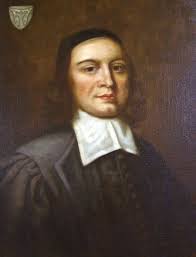
John Flavel (1627-1691)


Gary Brady


Gary Brady is a present-day John Flavel.  Like Flavel the Puritan, a minister in Dartmouth, Gary has been the pastor of an urban church for many years, and as Flavel became used to the ups and downs of such a life so no doubt has Gary. He has been pastor of Childs Hill Baptist Church in north west London since 1983. And like Flavel he is a considerable author, with five books already, and now a sixth, Candle in the Wind – Understanding Conscience in the Light of God’s Word. (EP Books, 2014, 242 pages). This post is by way of a modest celebration of it, and of Gary’s gifts as an author on this great but neglected topic.

Conscience is a permanent resident in every person, a personal moral and spiritual reflex of that very person that it is the conscience of. You have your conscience and I have mine, and mine does not throw a light on you, nor yours a light on me. Properly understood, it is the voice of God, which can be fine-tuned - sometimes too finely - or almost drowned out. It can excuse or accuse. It can thunder or whisper.  Whisperings can become full-throated. But it can be almost subverted by the culture, by upbringing, by friends or by the boss, by what we read and by the media.

A strong conscience, how about that? This is a conscience informed by the word of God. God is Lord of the conscience. Gary thinks that Christians with such a weapon, who know what they believe and what and what not to do,  should be careful of not bullying the weaker brethren.  That is, those sincere believers whose conscience is ill-informed  in some way. But a sound conscience is nevertheless a great good. There is a greater thing that parading your conscience, however, and making a thing of it, and that is love or concern for the weaker brethren. ‘…If I have prophetic powers, and understand all mysteries and all knowledge…but have not love, I am nothing’. This is the best section of the book, thoughtful and wise.

Here are some questions which I don’t think Gary touched on, though he touched on most things, I reckon, The question of whether the operation of conscience leads or follows what we do. Conscience seems to behave in either of these two ways. When you consider doing something, the conscience kicks in,   telling you that this is the right thing to do it, and so you do it, or at least try to do i.. At other times it is like a rear-view mirror, telling you that what you did was or wasn’t OK. Is this before – or after – behaviour significant? Or does it simply show dull or quick wittedness, as the case may be? The Christian’s conscience, like other things, is imperfectly regenerated, subject to ignorance, bias and weakness. The Christian is a ‘wretched man’ who has a conscience, he or she does not yet possess a perfectly judging and operating moral sense.

Most of Gary’s concerns are with the conscience as it operates within the sphere of the church. Here very definitely God is ‘Lord of the Conscience’, as Perkins and Ames and the Westminster Confession had it. But what about Gary’s hearers when they are at work or at leisure? If things are operating as they should then one cannot expect the same standards at meetings at work to the meetings at church. Ought conscience to operate differently in different circumstances? Is this dangerous, like having double standards? In one place Paul writes ‘I wrote to you in my letter [which unfortunately we do not possess] not to associate with sexually immoral people – not at all meaning the sexually Immoral of this world, or the greedy and swindlers, nor idolaters, since then you would need to go out of the world.’ As Augustine might have put it, church and world are two ‘cities’. Ought a Christian to have two sets of standards, two consciences, one for each city?  Don’t we in practice have two standards? When in Rome, do as the Romans do? Is this the place for some casuistry?

As a Baptist, Gary has an interest in liberty of conscience. He notes its development in England in the seventeenth-century. Particular Baptists have a confessional position advocating such liberty from the beginning, though in a restricted form. (Of course as he notes, any freedom of expression must have restrictions.)  In this Independents and Baptists were distinct from the Presbyterians and Anglicans, who edged their way to social liberty as it became clear to the powers that be that good Christian people could differ from each other on various matters which did not imperil the integrity of the state. (Socinians and Roman Catholics were another question!) Gary is quite keen on Roger Williams. Gary is uncertain about whether liberty of conscience is the teaching of the New Testament. But surely it can be considered as an application of the principle of 'Whatever you wish that others would do to you, do also to  them, for this is the law and the prophets'. Indeed it might be argued that freedom of conscience is like sanitation and public hygiene, an obvious good. But, alas, a good that it is hard for societies who enjoy it to retain, as we are currently seeing.

What Gary mainly does in his book – tho’ he does not say that he is doing it - is to treat the Christian life from the vantage point of the conscience. In conviction of sin, the voice of conscience is the voice of God. In penitence and faith, the troubled conscience, troubled by sins, can through exercising the faith which justifies, come to enjoy a good conscience, not a witness to failure but to Christ’s victory. But even then it can lapse through carelessness into an ill-formed conscience, a seared conscience, unfeeling. Watchfulness is needed. A Flavelian theme.

Gary takes us through all this in a clear, unassuming style. He has a light touch, chatty and unpretentious. Bags of quotations, and much good sense.  His favourite writers on the theme seem to be Mark Twain (The Adventures of Huckleberry Finn), and John Bunyan in his Holy War. Thanks, Gary, for a wholesome, entertaining and insightful read.  May you continue preaching and pen-wielding for many years to come!

Gary’s other books are - Heavenly Wisdom, The 1662 Great Ejection, What Jesus is Doing Now, The Song of Songs and Being Born Again


Thursday, October 01, 2015

The Covenant with Abraham.


A fresco said to be of the Patriarchs, Abraham, Isaac and Jacob

The Jews were entrusted with the oracles of God (Rom. 3.2) Through them Christ came, who is God over all, blessed for ever. We look now at the covenant with Abraham. According to Paul’s allegory (Gal. 4. 21-31) his fathering of a child (Ishmael) through Hagar, because of his impatience at the ‘delay’ in the fulfilment of God’s promise to him through Sarah, was ‘of the flesh’, because it flouted the covenantal conditions. Abraham’s fathering a child by Sarah at long last, Isaac, the covenant child, was according to the promise. Hence the ‘law’, which came to be central to the pursuit of deliverance in a merely fleshly way, follows in time the covenant of promise. The idea is that the law was wrested from its typical and schoolmasterish role to being made a scheme of works righteousness. 


Circumcision

Here I suggest that circumcision has to do with that strand of the promise to Abraham that pertains to the nation-state of Israel, covered by 'the land' of the Abrahamic covenant, temporary, and which once it became perverted into a scheme of ‘works righteousness’, was futile and doomed. Paul states in Galatians 5 that accepting circumcision as a necessity commits you to keeping the whole law as a means of salvation. ‘I testify again to every man who accepts circumcision [as obligatory for the Christian, and not as typifying the putting off of the flesh] that he is obligated to keep the whole law’. (5.2) Rather, what is required is what in his free grace the Lord gives, the circumcision of the heart. (Rom.1.29) The temporal order of things is important. Circumcision was instituted after the inauguration of the Abrahamic covenant, the law came after the promise, Moses came after Abraham.

In support of this, we note that In Colossians Paul characterises the gospel as a reception of circumcision as understood in the New Testament. ‘In him [Christ] also you were circumcised with a circumcision made without hands, by putting off the body of the flesh, by the circumcision of Christ….And you, who were dead in your trespasses and the uncircumcision of your flesh, God made alive together with him.’ (2.11f.) So regeneration and incorporation into Christ, epitomised by dying and rising with Christ, is described as a state of fleshly uncircumcision transformed by a circumcising made without hands.

In Romans, Paul teaches that in the case of Abraham himself, he was circumcised after he had received faith that was counted for him as righteousness. Circumcision was a seal of he righteousness he had received. So that order shows, Paul says, that Abraham was the father both of those who not being circumcised, nevertheless believed, as well as those who are circumcised and are citizens of the state of Israel, and who also had Abraham’s faith. The promise was received by Abraham through the righteousness of faith.

Undoubtedly this makes a straight comparison with old and new difficult.  It makes impossible the use of the OT theocracy in the era of Jeremiah 31.31  as it has in fact been treated Christianity or Christendom in the West. And it makes shaky those who see in the baptism of infants a follow on OT Israelitish circumcision.

So there is rather muffled, a somewhat ambiguous muzziness about the covenants, that to Abraham,  and especially that to Moses, and an especial skill or insightfulness is needed to trace the ‘line’ of the covenant of grace, of faith in the promise to Abraham, that through his seed (singular) may all the nations be blessed. This is partly because what happened in fact in the history of Israel is read back into the terms of the covenants themselves. We are required us to discern that the promises tied up in the original Abrahamic covenant and given to him, are revealed to have a different ‘weight’. They are not different facets of one covenant, it turns out, but different facets of different covenants, only one of which fulfils the promise to Abraham fully, the others having had different fulfillments in the OT, and these others are done away with the coming of Christ.

The  centre of gravity

For one further piece of this pattern we follow early Baptist theologians such as Nehemiah Cox by going for help to John Owen (one of the signatories of the Savoy Declaration), to his great commentary on Hebrews, Ch.8. John Owen stresses that  the death of Christ is the death of the testator, without which the terms of the testament will remain inoperative, null and void. (Heb. 9,17)

There are different ways in which the NT affirms these differences. In Hebrews, one way is to stress the sacrifices made every year, in which sin is remembered every year in the atonement, brought to the minds of the people, if they had thought about is a merely typical act of atonement. It is impossible for the blood of beasts can take away sin. This is sharply contrasted with that sacrifice whose efficacy is such that those who are recipients of such atonement have sins and iniquities remembered no more. Heb 10.11f

But the difference which is surely the most striking is that by the time of the coming of Christ the terms of the new covenant of Jeremiah 31.31 are not yet fulfilled, not until Christ’s death and resurrection. He is the covenant head and testator. Without and until the death of the testator the deed is not done  (Hebrews chs 9, 10.). The centre of gravity of the covenant of grace is placed firmly in the messianic era. What enables a situation in which all shall be taught of God. (John 6.45).  and the sins of men and women, of Jew and Gentile, shall be remembered no more? The answer is the death of the testator of the covenant, which occurred in the death and resurrection of the testator, Christ, according to the Letter to the Hebrews.

So what are we to say about the Mosaic covenant? That it was a national covenant, establishing Israel as a theocratic nation redeemed from the bond-slavery of Egypt. Its literature was partly typological of the world of the Messiah, and the maledictions attached to failure to keep the law were a continuous ‘preaching of the law’ to prompt the people to trust in the mercy of God and not in their own supposed righteousness. And in the mercy of God a remnant, including some Gentiles, had faith in and hope for what was to come. They did not receive what was promised (Heb 11.39).  And the entire edifice was a protective carapace to keep the Abrahamic covenant from being corrupted by alien cultures until the time of the Messiah’s coming.  Jesus was born into what remained of that carapace , hence he was circumcised. But by his death and what it effected he ushered in an era in which ‘neither circumcision counts for anything, nor uncircumcision, but a new creation’. (Gal. 6.15)


(In trying to get clear on these matters I have been helped by some of the writings on the covenants published by RBAP, particularly Recovering a Covenantal Heritage: Essays in Baptist Covenant Theology, ed. Richard A Barcellos (2014) and the literature cited therein. Especially, in this book, 'John Owen on the Mosaic Covenant' by Thomas Hicks. There is repetition in the book, and the of nuancing of positions, as well as inexact language, which, given the difficulty of encompassing all relevant biblical data in a 'doctrine of the covenants', is hard to justify.  Nevertheless, the trajectory must be the correct one. Sometimes one has the thought that there are data staring us in the face like loose jig-saw pieces, which (if we saw them for what they are), everything would be made much plainer. But maybe not.)

Sunday, September 20, 2015

The Lord’s Prayer and Submission to the Will of God


In this short piece I wish to offer an interpretation of the most repeated and most familiar of prayers, the Lord’s Prayer. 

A modern view of prayer

When we reflect on it, on its spirit, nothing could be more different from the expressions of that piety which we routinely teach our children, a piety of taking Jesus into our hearts and of the need to establish a relationship with Jesus, partly if not wholly through asking things of him which in due course he will – or may not - provide  us what we ask for. What matters is our relationship to the Father, of which Jesus is the Mediator.

Nor is the Prayer easily related to how modern evangelical Christians speak of prayer, as if it is a sort of stuff: ‘He’s ill so he needs more prayer’. The idea of this is that prayer is a sort of force aimed in the direction of God, an unwilling or distant God, to get us what we want when other means fail, and even perhaps when other means haven’t failed. Sometimes we seem to think of prayer as a first-class delivery system, through the use of which we can ensure a rapid response.

A different model

This is a model of Christian prayer  taught by Jesus two thousand odd years ago about what his followers are to pray for  when they address  his Heavenly Father. It is not a prayer to Jesus taught by Jesus, but a prayer to his Father and our Father. Jesus is the mediator of our prayers, including teaching his people the spirit of prayer. He is not the one to whom are prayers are to be addressed.  No doubt Jesus’ prayers to his Father provide a kind of paradigm for the understanding of this prayer, the most familiar and yet the strangest of all prayers.

I suggest that the Lord’s Prayer is primarily intended to shape us, not to wake up the Lord. It is God-centred template for prayer. It emphasises not our needs but God’s transcendence and sovereignty. God, our Father, is in heaven, he is out Creator and Lord, and his name is to be hallowed, to be revered. He has a kingdom, and the petitioner seeks to align himself to the purpose of God with the bringing about of that kingdom. This has nothing to do with the problems in the Middle East, or the refugees, or the latest tragedy highlighted by the media. We are not asking the Lord to take charge of the H.M. foreign policy. It is not a prayer for peace, though elsewhere in the New Testament we are encouraged us to pray for peace.   The prayer is not that God's kingdom will be transformed into an earthly kingdom – the entirety of Jesus’ teaching on the kingdom is against such an idea. This is that God’s kingly reign in heaven may be extended on earth. This is exactly what the early disciples in their first encounters with Jesus thought that he was, a revolutionary Che Guevara figure. In the case of God's kingdom men and women enter it through penitence and faith in the Messiah, the mediator of the covenant.

But what about ‘Give us this day our daily bread’?  Isn’t this the real business of the prayer, to get us those things that we want, and persuade ourselves what we need? Isn't this the difference that being a Christian brings, the possession of a hot line to the Almighty? After all, isn’t God concerned with every detail of our lives? The spirit of this petition is - alas! - very different from that of promoting a sort of Christian consumerism.  It is a request for bread that we need in order to live. It shows our dependence on Almighty God. Give us day by day the bread we need. The bottom line. In the last analysis it is God alone who can keep us going physically. It is a prayer both of submission to God, and of contentment with his care. It is not a prayer which  contains within it all the aspirations of worldly ambition, and which we are free to extend to the entirety of our wish list. The reverse.  It is a prayer that the Lord will give us contented spirit.

Such minds must include a forgiving spirit.  Why should we hope for forgiveness from God when we are unforgiving to those who upset us?  Our showing forgiveness to others, and especially to those who have offended or harmed us in some way, is not a condition of God forgiving us, as a quick reading of the petition may suggest.  But rather, how can we in reason expect the Lord to forgive our trespasses if we in turn have a spirit that is unwilling to forgive those who trespass against us, a mean-spirited and selfish outlook? It is incongruous to hope for our own forgiveness while at the same time we are hard-hearted to others.

A prayer of self-denial

And finally, the prayer returns us to where we began. The kingdom, the power and the glory are not ours, much less is praying to be centred on such concerns, our own advancement. The kingdom that  has no end, and the power and the glory of it,  are the Lord’s alone. And those people have a part in this coming glory who enjoy his free forgiveness, and who themselves have a forgiving spirit.

So the prayer is a prayer of discipleship.